
- Location: About 50 km northwest of Ho Chi Minh City, near the Saigon River.
- Landmark: Adjacent to the Cu Chi Tunnels Memorial Park, with visible trapdoor and tunnel replicas.
- Accessibility: Tunnels have been widened for tourists; easier to navigate for first-time visitors.
- Highlight: Trapdoor demos, weapon displays, and a firing range for an interactive experience.
Cu Chi Tunnels map: Explore key sites, visitor tips, & more
Explore the incredible underground world of the Cu Chi Tunnels, an essential stop for anyone visiting Ho Chi Minh City. This map guide helps you explore the main tunnel sections, entrances, and nearby attractions with ease. Use it to plan your visit, discover key sites underground, and get practical visitor tips to make the most of your Cu Chi Tunnels experience.
Cu Chi Tunnels’ entrances & access points explained
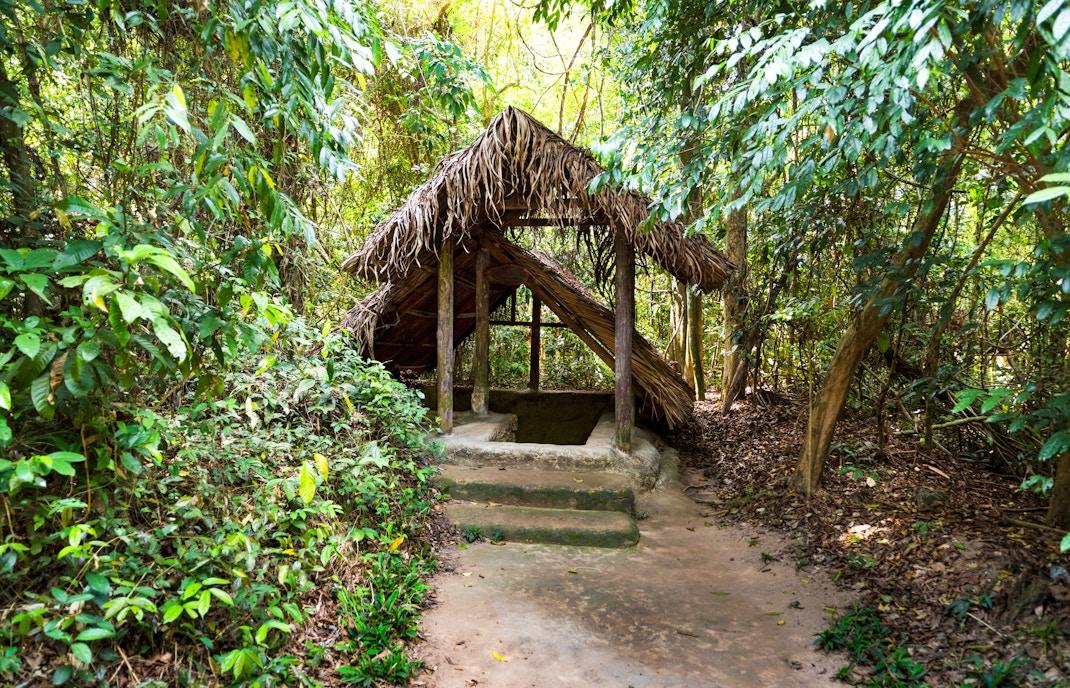
Ben Dinh Entrance
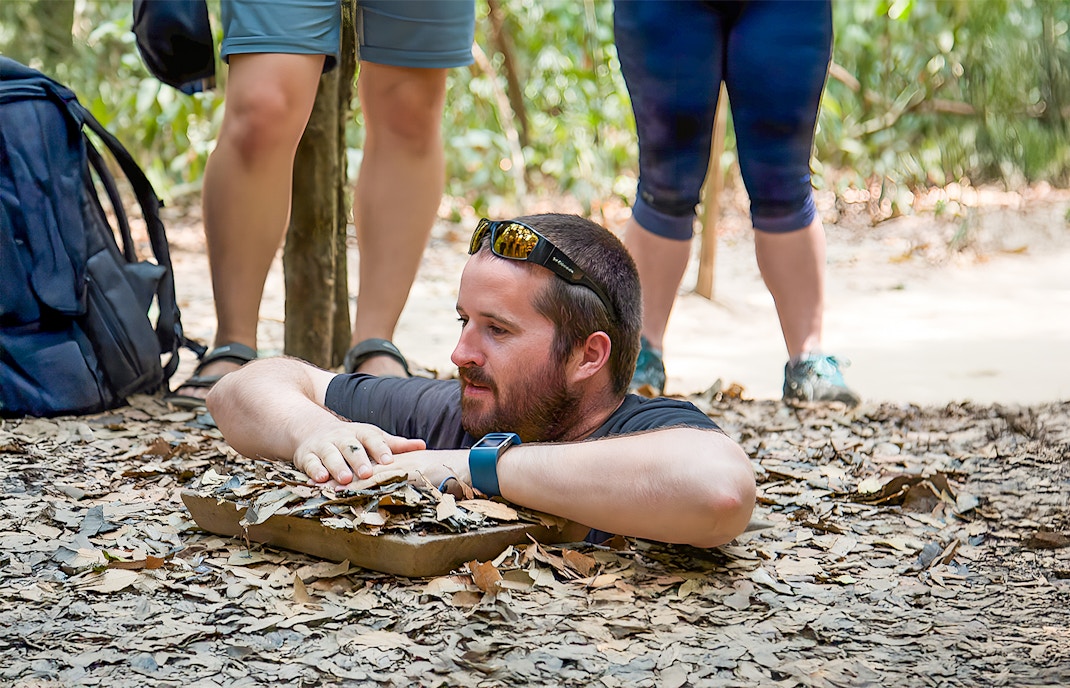
Ben Duoc Entrance
- Location: Approximately 70 km from Ho Chi Minh City, deeper in the Cu Chi District forest.
- Landmark: Near the Ben Duoc Temple, a peaceful memorial honoring fallen Vietnamese soldiers.
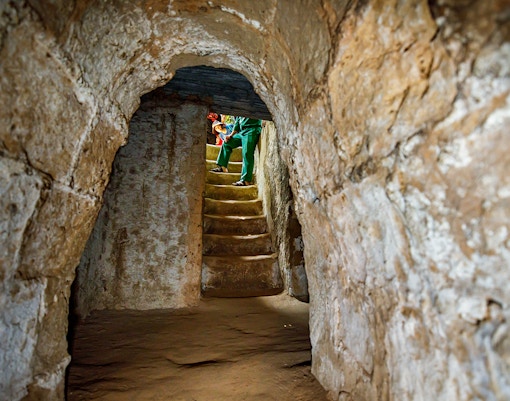
- Accessibility: Retains original tunnel dimensions; requires stooping or crawling through narrow passages.
- Highlight: More authentic and less crowded, ideal for those wanting a realistic look at wartime conditions.
A look inside: Journey through the different sections of the tunnels
The Cu Chi Tunnels stretch across three levels — from the upper defense layer with trapdoors and hidden exits, to the middle level housing living quarters and kitchens, and the deepest layer built for command centers and storage, safe from heavy bombing.
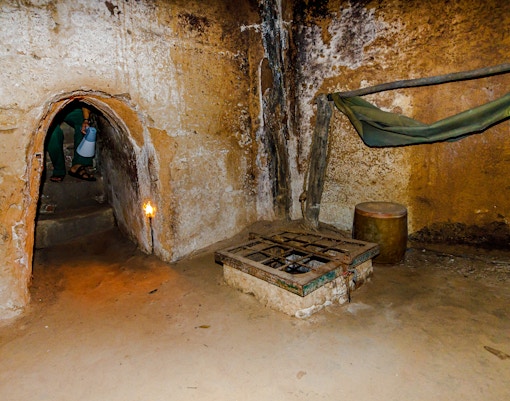
Living quarters
Compact sleeping spaces with wooden platforms, shared by soldiers during long underground stays.
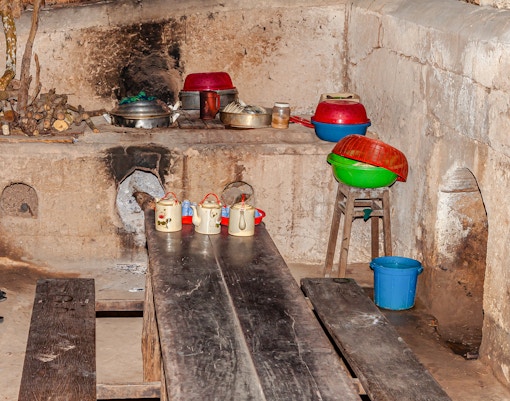
Hospitals & storage areas
Contained makeshift operating rooms and supply depots for food, weapons, and medical gear.
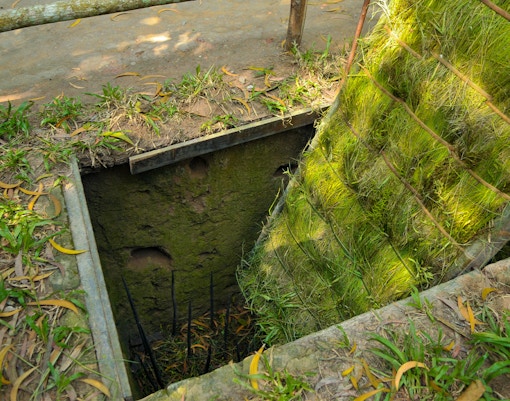
Booby trap displays
Above-ground exhibits showcasing the traps used to protect tunnel entrances from intruders.
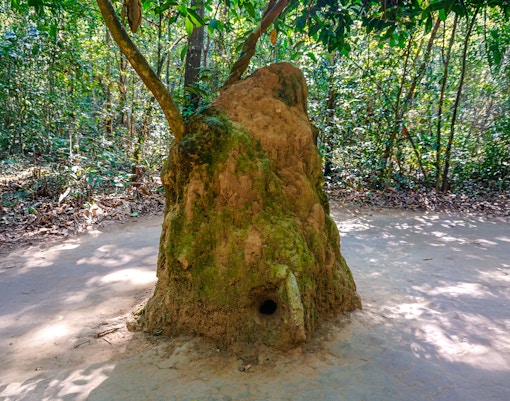
Ventilation shafts
Camouflaged as termite mounds to circulate air and release smoke without revealing tunnel positions.
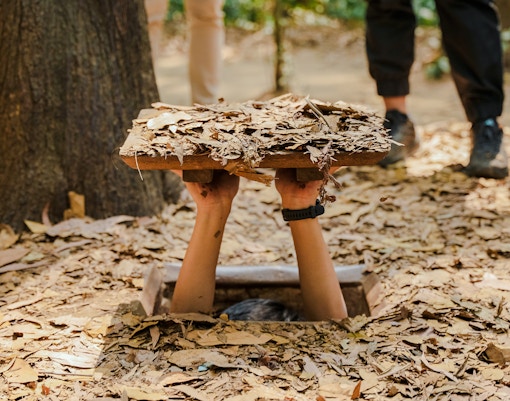
Concealed entrances
Tiny openings, often the size of an A3 sheet, designed to admit Vietnamese soldiers but block larger enemies.
Things to see near the Cu Chi Tunnels
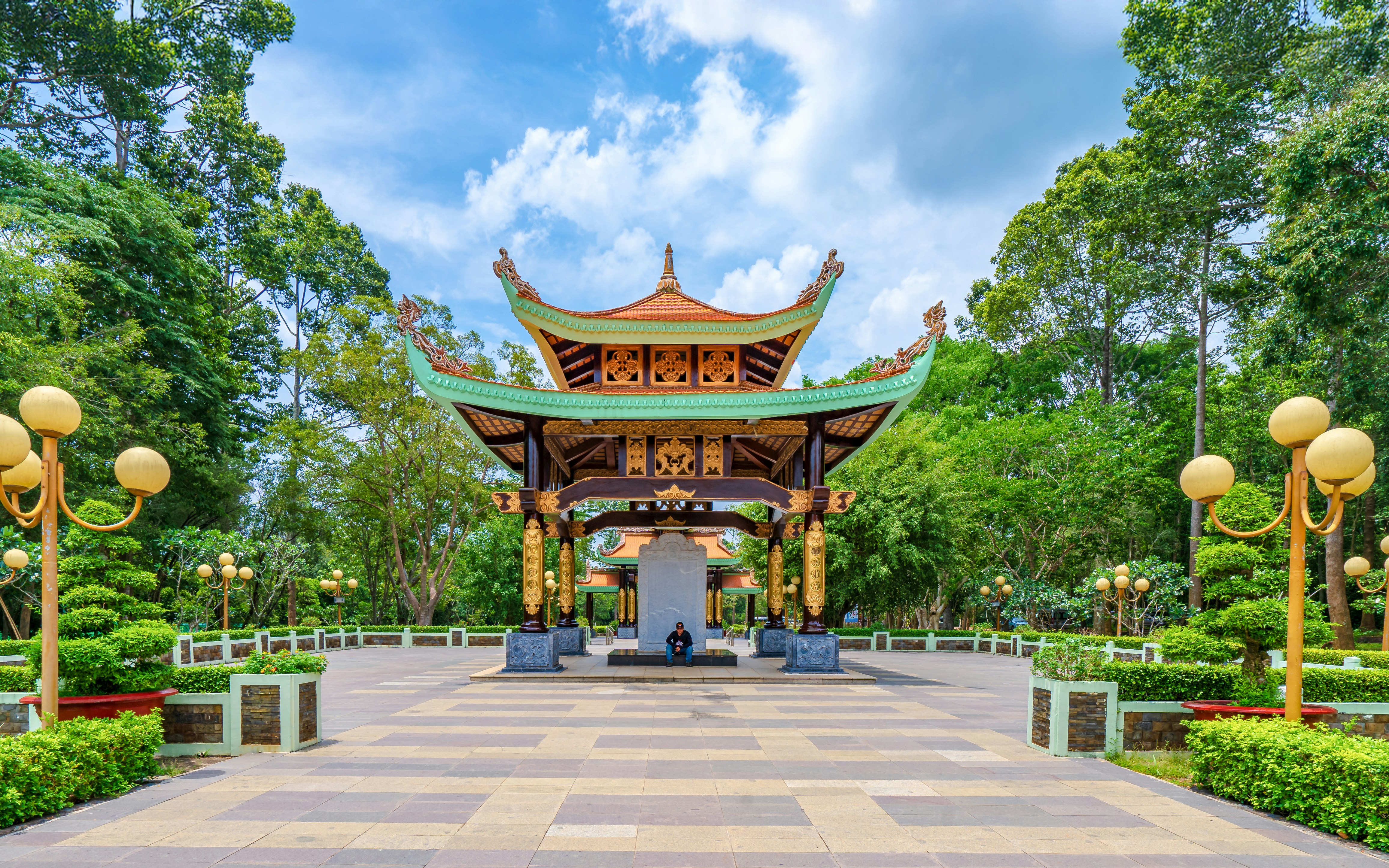
Ben Duoc Temple
Built in 1993 as a memorial to war heroes, this serene pagoda sits on the Saigon River and includes an underground shrine and bell tower.



Key tips for exploring Cu Chi Tunnels
- Choose the right site: Ben Dinh is closer to Ho Chi Minh City and more tourist-friendly, while Ben Duoc offers a quieter, more authentic experience.
- Experience the tunnel crawl strategically: Choose shorter sections (20–40 m) if you’re new to confined spaces — deeper routes can get hotter and tighter the further you go.
- Visit the shooting range with caution: Live ammunition can be loud; ear protection is available on-site, but bring your own for comfort.
- Time your visit with fewer crowds: Early morning (8–9 AM) or late afternoon (after 3 PM) offers cooler temperatures and better photo opportunities.
- Don’t miss the documentary film: A short war-time video shown at the start gives insight into the tunnel’s strategic importance and life underground.
- Ask for the trapdoor demo: Guides often let you try lifting a camouflaged entrance lid — it’s surprisingly heavy and cleverly hidden.
Read More
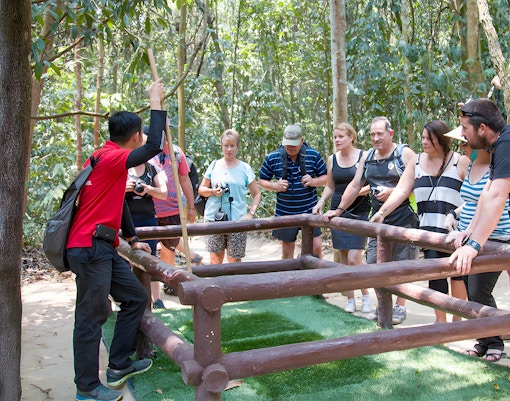
Guided Tours
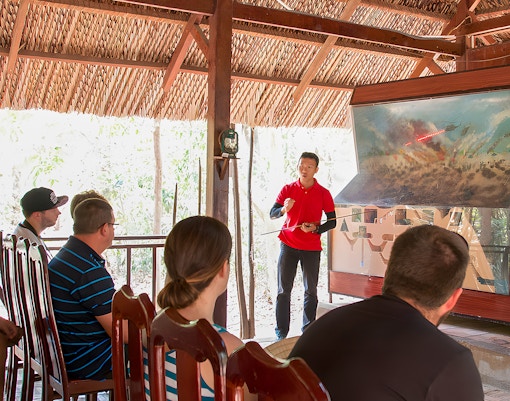
Half-Day vs. Full-Day Tours
Directions

Plan Your Visit
Frequently asked questions about Cu Chi Tunnels map
You can view or download the map directly from this page! We’ve included a clear, easy-to-read version so you can plan your route and make the most of your visit.
Originally, there were over 200 hidden entrances across Cu Chi District. Today, visitors can access the tunnels through two main sites — Ben Dinh and Ben Duoc.
No — only selected, reinforced sections are open to tourists. The map highlights accessible areas, entrances, and nearby exhibits.
Yes. The sections open to the public have been reinforced and ventilated, though visitors should mind low ceilings and tight spaces.
A typical guided visit lasts 2–3 hours, including the documentary, exhibits, tunnel crawl, and outdoor activities.
Not ideal for those with claustrophobia, knee, or back problems due to narrow and low tunnels.
Yes, but it requires a full-day private or guided tour, as the two sites are around 15 km apart.

